When Little Ones Can’t Find Their Words: How Baby Signs Help Toddlers Thrive
At Castle Creek Christian Academy, we believe every child deserves to feel heard, understood, and celebrated, even before they have the words to express themselves. One of the most meaningful ways we nurture that belief in our daycare program is through the intentional teaching of baby signs. It is a simple, research-supported practice that has transformed the way our littlest learners communicate, connect, and grow. If you have ever watched a toddler dissolve into tears because no one could understand what they needed, you already know how deeply communication matters in these early years.
Before most children develop the motor skills needed for speech, they are already capable of so much more understanding than they can express. The gap between what a toddler comprehends and what they can say out loud is one of the leading sources of frustration for both children and caregivers. Studies from the University of California, Davis found that babies who were taught simple signs experienced significantly fewer behavioral outbursts and demonstrated stronger early language skills than those who were not. That research gives us confidence that what we are doing in our classrooms each day is genuinely making a difference for the children in our care.
What Baby Signs Actually Are (and Are Not)
Baby signs are simplified hand gestures drawn from American Sign Language that correspond to common words and needs, things like “more,” “all done,” “water,” “help,” and “please.” They are not a replacement for spoken language. This is one of the most important points we share with families when they first hear about our program. Baby signs are a bridge, a temporary tool that allows toddlers to communicate their needs clearly while their verbal abilities are still developing. Children who use baby signs do not speak later than their peers. In fact, the opposite is consistently supported by research.
How Baby Signs Reduce Frustration for Toddlers
Imagine a 14-month-old who is thirsty but cannot yet say the word “water.” Without a way to communicate that need, frustration builds quickly and what starts as mild discomfort can escalate into a full meltdown within minutes. Now imagine that same child confidently tapping two fingers to their chin, signing “water,” and having a caregiver respond immediately with a cup. The relief on that child’s face is something our teachers describe as one of the most rewarding moments in early childhood education.
When toddlers have a reliable way to express their basic needs, they spend less energy on frustration and more energy on curiosity, play, and learning. That shift in emotional regulation has a ripple effect across every part of their day at our academy.
The Language Development Connection
One of the reasons we are so committed to baby signs at Castle Creek Christian Academy is the strong body of evidence linking early signing to accelerated verbal development. Dr. Linda Acredolo and Dr. Susan Goodwyn, pioneers in baby sign research, conducted longitudinal studies showing that signing babies scored higher on language development assessments at ages two and three than their non-signing peers. The act of pairing a gesture with a word reinforces neural pathways in the developing brain, essentially giving language two entry points instead of one.
Our teachers always say the sign alongside the spoken word, never in place of it. That consistency matters because the goal is always rich verbal communication. Baby signs simply give toddlers a way to participate in that communication while they are working toward it.
Building Confidence from the Very Beginning
There is something profound that happens when a young child realizes their communication works. They sign “more,” and more appears. They sign “help,” and help arrives. That experience of being understood builds a foundational confidence that extends far beyond the early years. Children who feel heard become children who are willing to try, to ask questions, and to engage with the world around them.
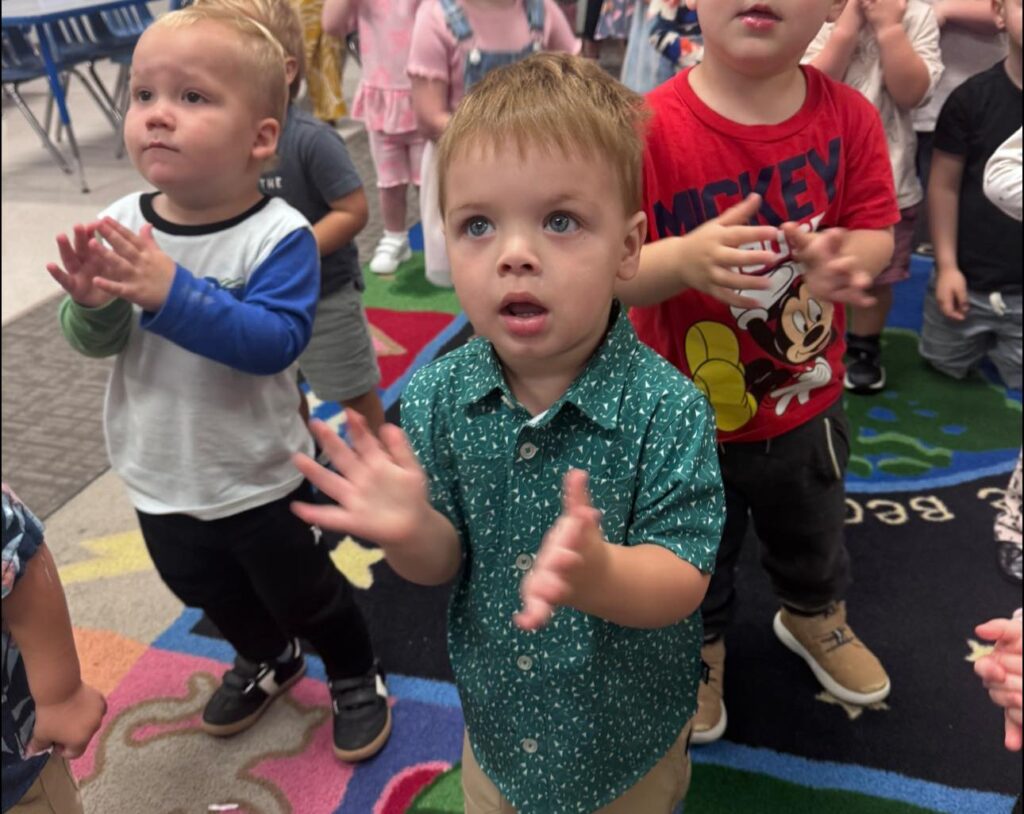
At Castle Creek Christian Academy, we see this confidence bloom in our classrooms every day. A toddler who once cried at every transition begins to sign “all done” with a proud little grin. A shy child who rarely initiated interaction starts reaching toward a teacher to sign “play.” These are small moments with enormous meaning.
What Families Can Expect
When your child joins our daycare program, our team begins introducing signs naturally throughout the daily routine, during snack time, outdoor play, story time, and transitions. We also share a simple reference guide with families so the signs can be reinforced at home. Consistency between home and school is one of the most powerful factors in how quickly children begin using signs confidently.
You do not need any prior experience with sign language to support your child in this process. A handful of core signs, practiced consistently and warmly, is enough to open a meaningful new channel of communication between you and your toddler.
The early years are full of wonder, and they also come with very real communication challenges. Baby signs give toddlers a voice during one of the most formative seasons of their lives, and that is a gift we are honored to offer every child who walks through our doors. If you are ready to see the difference an intentional, nurturing environment can make for your little one, we invite you to schedule a tour of Castle Creek Christian Academy today and experience our community firsthand.