
Toddler Independence & Exploration in Flower Mound
How Can I Encourage My Toddler’s Independence and Exploration in Flower Mound, TX?
You can encourage your toddler’s independence by providing safe opportunities to make simple choices, explore through play, practice age-appropriate tasks, and solve small problems with supportive adults nearby. The goal is not to push toddlers to do everything alone. It is to create a secure environment where they can confidently try new things, build skills, and return to a trusted caregiver when they need help.
At Castle Creek Christian Academy, we understand that the toddler years are filled with exciting changes. Children are learning to move with greater confidence, communicate their preferences, test ideas, and discover what they can do for themselves. Our approach to toddler care in Flower Mound combines nurturing relationships, purposeful learning experiences, age-appropriate expectations, and opportunities for exploration. By giving children room to try while providing consistent guidance and encouragement, caregivers can help toddlers develop confidence without sacrificing the security and structure they still need. For families, this balance can turn everyday moments, from putting away a toy to investigating something new outside, into meaningful opportunities for growth.
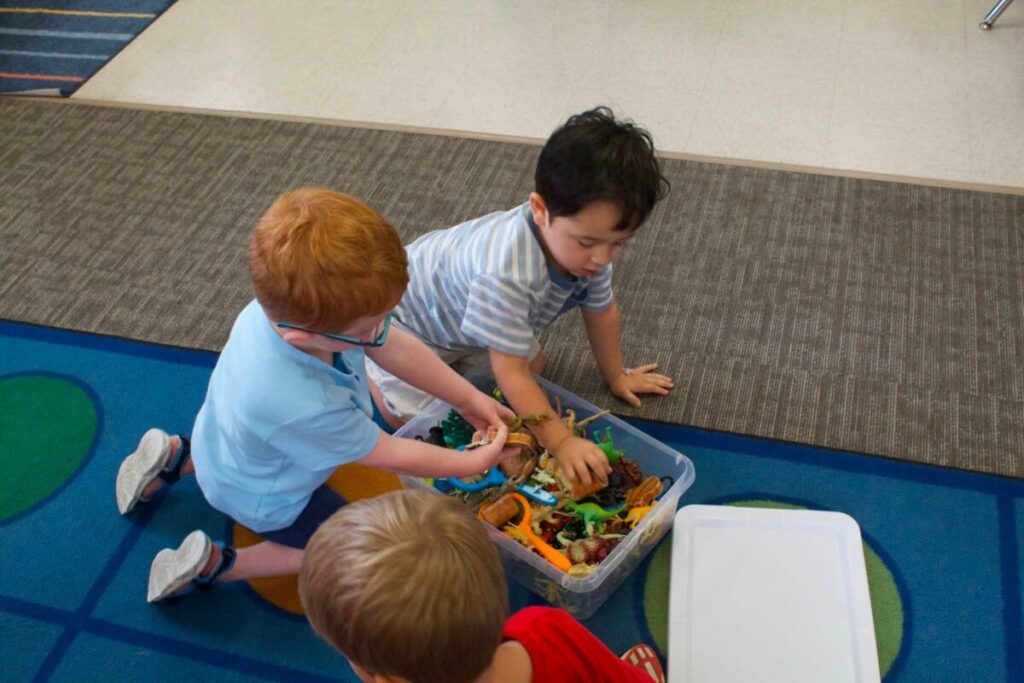
Building Toddler Confidence Through Independent Play and Exploration
Toddlers become more independent when adults provide a safe structure and then give them enough freedom to participate, experiment, and make choices. Play is especially important because it allows children to practice physical, cognitive, social, and communication skills in ways that feel natural.
The American Academy of Pediatrics’ HealthyChildren.org explains that play is how toddlers explore and learn about the world. Simple materials such as blocks, books, crayons, containers, and other safe everyday objects can provide valuable opportunities for discovery.
Why Is Independence Important for Toddler Development?
Independence helps toddlers develop confidence, problem-solving abilities, self-control, and a growing sense of competence. Small experiences such as attempting to put on a shoe, carrying an item to the table, choosing a book, or building a block tower teach children an important lesson: “I can try.”
Adults can nurture this developing independence through simple opportunities such as:
- Offering two appropriate choices, such as choosing between two books
- Encouraging toddlers to help clean up after play
- Allowing extra time for children to attempt simple self-help tasks
- Providing open-ended toys and materials that can be used in different ways
- Giving encouragement for effort rather than immediately completing a task for the child
- Maintaining clear safety boundaries while allowing appropriate exploration
The key is matching expectations to the child’s developmental stage. A task should provide enough challenge to encourage learning without creating unnecessary frustration.
How Can Adults Encourage Exploration Without Sacrificing Safety?
The best environment for toddler exploration combines freedom within clear, consistent boundaries. Instead of preventing every mistake or immediately stepping in, caregivers can prepare safe spaces where toddlers have appropriate opportunities to experiment.
For example, children might stack blocks and discover why a tower falls, pour between containers during supervised sensory play, or experiment with fitting objects into different spaces. These experiences introduce concepts such as cause and effect, size, balance, and persistence.
Safety remains the foundation. Adults should supervise closely, remove choking and other hazards, use developmentally appropriate materials, and establish simple boundaries children can begin to understand. Independence does not mean a lack of supervision. It means giving children appropriate freedom inside a thoughtfully prepared environment.
When Should I Help My Toddler, and When Should I Let Them Try?
Give your toddler time to attempt a safe, manageable task before stepping in. If frustration becomes overwhelming, the task is unsafe, or the child clearly needs assistance, offer enough help to move forward without automatically taking over.
This balance creates opportunities for problem-solving while reassuring children that caring adults are available when needed.
Responsive adult interaction is also an important part of early development. The Center on the Developing Child at Harvard University describes responsive back-and-forth exchanges between children and caregivers as “serve and return” interactions. These interactions help strengthen neural connections involved in communication and social development.
A caregiver might see a toddler examining a leaf and say, “You found a leaf. How does it feel?” The child points, makes a sound, or responds with a word, and the adult responds again. The child is leading the discovery, but the caregiver is enriching the experience.
What Types of Activities Help Toddlers Become More Independent?
The most effective activities are usually simple, hands-on, and flexible. Toddlers do not need complicated lessons to practice independence.
Useful activities can include:
- Self-help routines: Let children practice washing their hands, putting items away, feeding themselves, or helping with simple classroom and household tasks.
- Open-ended play: Blocks, pretend-play materials, art supplies, and age-appropriate sensory experiences allow children to make decisions about what happens next.
- Outdoor exploration: Walking, climbing, observing nature, and active play encourage physical confidence and curiosity.
- Simple problem-solving: Shape sorters, stacking toys, puzzles, and building materials encourage toddlers to try different solutions.
- Everyday choices: Choosing between two snacks, activities, or books gives toddlers appropriate control while adults maintain necessary boundaries.
Research resources from Harvard’s Center on the Developing Child also emphasize play as an opportunity to practice attention, working memory, and basic self-control, all skills that support growing independence.
For Flower Mound families, opportunities for exploration extend beyond the classroom and home. The Town of Flower Mound maintains more than 1,000 acres of parkland and approximately 64 miles of multi-purpose trails, along with neighborhood parks featuring playgrounds and other family amenities. Families can use these community spaces for simple activities such as nature walks, supervised playground exploration, noticing plants and animals, or allowing toddlers to choose which direction to walk along a safe path.
How Does a Consistent Routine Support Independence?
Predictable routines can actually make children more willing to act independently because they understand what is expected. When toddlers know what comes next, they can begin participating in familiar steps without constant adult direction.
HealthyChildren.org notes that predictable routines can make transitions easier for toddlers. At home or in child care, adults can build independence into routines by using simple prompts such as, “Where does your cup go?” or “Can you put the book back on the shelf?”
Over time, repetition turns supported participation into greater independence.
Frequently Asked Questions About Toddler Independence
At what age do toddlers start becoming independent?
Signs of growing independence often emerge during the toddler years as children become more mobile, communicative, and interested in doing things themselves. Development varies from child to child, so caregivers should focus on age-appropriate opportunities rather than comparing one toddler’s independence with another’s.
Should I let my toddler struggle with a task?
Brief, manageable frustration can provide an opportunity to practice persistence and problem-solving. Stay nearby, offer encouragement, and step in when the task becomes unsafe or frustration prevents productive learning.
Does giving toddlers choices encourage independence?
Yes. Limited choices allow toddlers to practice decision-making without becoming overwhelmed. Offering two acceptable options, such as “Would you like the red cup or the blue cup?” gives the child some control while the adult maintains appropriate boundaries.
Is independent play important for toddlers?
Yes. Independent play gives toddlers opportunities to follow their curiosity, make decisions, experiment, and solve simple problems. It should be balanced with responsive interaction and supervised play with caring adults.
Help Your Toddler Grow With Confidence at Castle Creek Christian Academy
Toddler independence develops through hundreds of small experiences: choosing, trying, exploring, making mistakes, receiving encouragement, and trying again. With a safe environment and responsive adults nearby, those everyday moments can build confidence and lay a strong foundation for future learning.
At Castle Creek Christian Academy, we provide Flower Mound families with nurturing toddler care designed to encourage curiosity, age-appropriate independence, meaningful play, and positive relationships.
Ready to learn more about toddler care at Castle Creek Christian Academy? Contact us today to discover how we can support your child’s next stage of growth.