
How Can Christian Preschool Help Young Children Practice Kindness and Self-Control?
Christian preschool can help young children practice kindness and self-control by combining biblical character lessons with consistent routines, teacher modeling, guided play, and everyday opportunities to share, wait, forgive, and manage emotions. In a nurturing Christian classroom, children do more than hear about patience, compassion, and self-control. They practice these skills with caring adults and classmates throughout the school day.
At Castle Creek Christian Academy in Flower Mound, TX, we believe early education should nurture a child’s heart as intentionally as it develops the mind. Our preschool program combines academic preparation, social-emotional growth, independence, and biblical truth in a safe, nurturing environment. Children learn character through age-appropriate Bible lessons, relationships with teachers, classroom responsibilities, play, and real interactions with friends. Our goal is not to expect preschoolers to behave perfectly. It is to give them loving guidance and repeated opportunities to make kind, thoughtful choices as they grow in confidence and faith. Castle Creek’s preschool program specifically emphasizes biblical truths and “character seeds,” including learning to be kind, honest, and helpful.
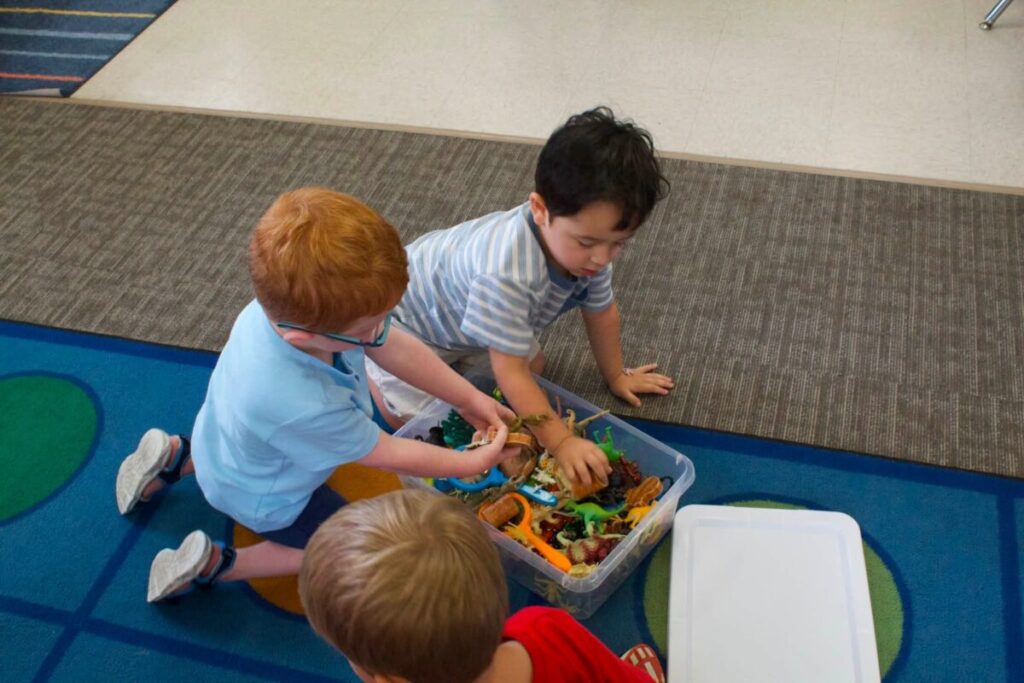
Building Christian Character and Self-Regulation in Preschool
Kindness and self-control develop through practice. Young children need supportive adults, predictable expectations, and plenty of opportunities to use these skills in real situations.
The National Association for the Education of Young Children (NAEYC) explains that play supports self-regulation and social development, while high-quality preschool experiences help children learn to cooperate, respect others, and resolve conflicts. Head Start likewise identifies relationships, emotional regulation, friendship skills, and problem-solving as important parts of healthy early childhood development.
A Christian preschool can add another meaningful layer by connecting those developing abilities to biblical principles children can understand and practice.
How Does a Christian Preschool Teach Kindness?
Kindness becomes easier for young children to understand when they see it, talk about it, and practice it. Instead of treating kindness as an abstract rule, teachers can help preschoolers recognize what loving their neighbor looks like in everyday classroom situations.
That might mean encouraging children to:
- Invite another child to play
- Share classroom materials
- Comfort a friend who is sad
- Use gentle words and actions
- Help clean up a shared space
- Say “I’m sorry” and practice forgiveness after conflict
- Show gratitude to teachers and classmates
Christian stories and lessons can reinforce these experiences. A Bible story about compassion, for example, can lead to a conversation about how a child might help a classmate who falls down on the playground.
Children also learn by watching adults. Head Start notes that young children learn from example, including how adults solve conflicts and manage emotions. NAEYC similarly emphasizes trusting relationships in which educators model and reinforce positive behavior.
At Castle Creek, biblical character development is intentionally woven into preschool learning, helping children connect faith with qualities such as kindness, honesty, and helpfulness.
How Do Preschoolers Learn Self-Control?
Preschoolers develop self-control gradually by practicing how to pause, wait, follow directions, handle frustration, and choose an appropriate response. These abilities are still developing during the preschool years, so children need guidance rather than expectations of adult-level emotional control.
Harvard University’s Center on the Developing Child describes executive function and self-regulation as skills that help people focus attention, manage information, make decisions, and plan ahead. Children are not born with fully developed executive function skills, but their experiences and environments can help strengthen them.
In a preschool classroom, self-control practice can happen naturally when children:
- Wait for a turn with a favorite toy.
- Listen while another child is speaking.
- Follow the rules of a classroom game.
- Stop and use words instead of grabbing.
- Transition from playtime to another activity.
- Work through frustration when something is difficult.
Head Start’s preschool guidance notes that children ages 3 to 5 show increasing ability to manage emotions and use coping strategies, although they may still need adult support, especially with intense feelings.
This is why patient, consistent guidance matters so much.
Why Are Play and Classroom Routines Important for Self-Control?
Play and predictable routines give preschoolers repeated, low-pressure opportunities to practice regulating their behavior.
During cooperative play, children have to negotiate, listen, take turns, adapt when plans change, and communicate what they need. NAEYC identifies play as a central early-childhood teaching practice and notes links between play and abilities such as self-regulation, working memory, social skills, language, and problem-solving.
Routines provide another kind of practice. A child learns that there is a time to play, a time to listen, a time to clean up, and a time to wait. Gradually, children become more capable of managing these transitions with less adult assistance.
These ordinary moments can become character-building moments too. A teacher might connect waiting patiently with self-control or helping with cleanup with serving others. Faith is then something children practice, not simply something they hear about.
How Can Parents Reinforce Kindness and Self-Control at Home?
Children benefit when home and preschool use consistent language and expectations around emotions, kindness, and behavior.
Flower Mound families can reinforce classroom learning through simple everyday experiences. Try asking specific questions such as, “How did you help someone today?” or “Was there a time you had to wait for your turn?”
Families can also practice by:
- Playing games that require taking turns and following rules
- Naming emotions without criticizing the child for having them
- Praising specific acts of kindness
- Practicing calming strategies together
- Reading Bible stories about compassion, patience, forgiveness, and service
- Modeling apologies and forgiveness when family conflicts happen
NAEYC recommends games with changing rules as one way families can help preschoolers practice self-control.
These lessons can extend beyond home and school. Whether a family is playing at a Flower Mound park, attending church, visiting friends, or running errands around town, everyday community experiences offer children chances to greet others kindly, wait patiently, help someone, and practice respectful behavior.
Frequently Asked Questions About Christian Preschool and Character Development
At what age do children begin learning self-control?
Self-regulation begins developing very early and continues throughout childhood. During the preschool years, children become increasingly able to manage feelings, attention, and behavior, but they still need consistent support and coaching from caring adults.
Can preschool really teach kindness?
Yes. Preschool gives children frequent opportunities to practice sharing, cooperation, empathy, conflict resolution, and friendship. Caring teachers can model these behaviors and guide children through real social situations.
What makes Christian character education different?
Christian character education connects everyday choices with biblical values. Children can learn that kindness, patience, forgiveness, honesty, compassion, and self-control are not simply classroom rules, but ways to love God and care for other people.
What should parents look for in a Christian preschool in Flower Mound?
Look for a preschool where faith is integrated naturally into the day, teachers model the values they teach, children receive developmentally appropriate guidance, and social-emotional development is valued alongside academics. Castle Creek Christian Academy’s Flower Mound preschool program combines a Christian foundation with academic readiness, independence, social growth, and biblical character development.
Help Your Child Grow in Faith, Kindness, and Confidence
Preschool is about much more than learning letters and numbers. It is also a season when children are learning how to be a friend, respond to frustration, care for others, make choices, and participate in a community.
At Castle Creek Christian Academy, we help Flower Mound children grow academically, socially, emotionally, and spiritually in a nurturing Christian environment. Through loving relationships, purposeful learning, biblical truth, play, and daily opportunities to practice positive choices, children can begin building character skills that prepare them for kindergarten and beyond.
Ready to see how Christian preschool can nurture your child’s mind, heart, and faith? Contact Castle Creek Christian Academy to learn more or schedule a visit.